Please ensure Javascript is enabled for purposes of website accessibility

A Prayer for the Oppressed – After Dua Nasiri

After attending a Payers for Palestine event, Rev. Abhi offers this prayer in response.

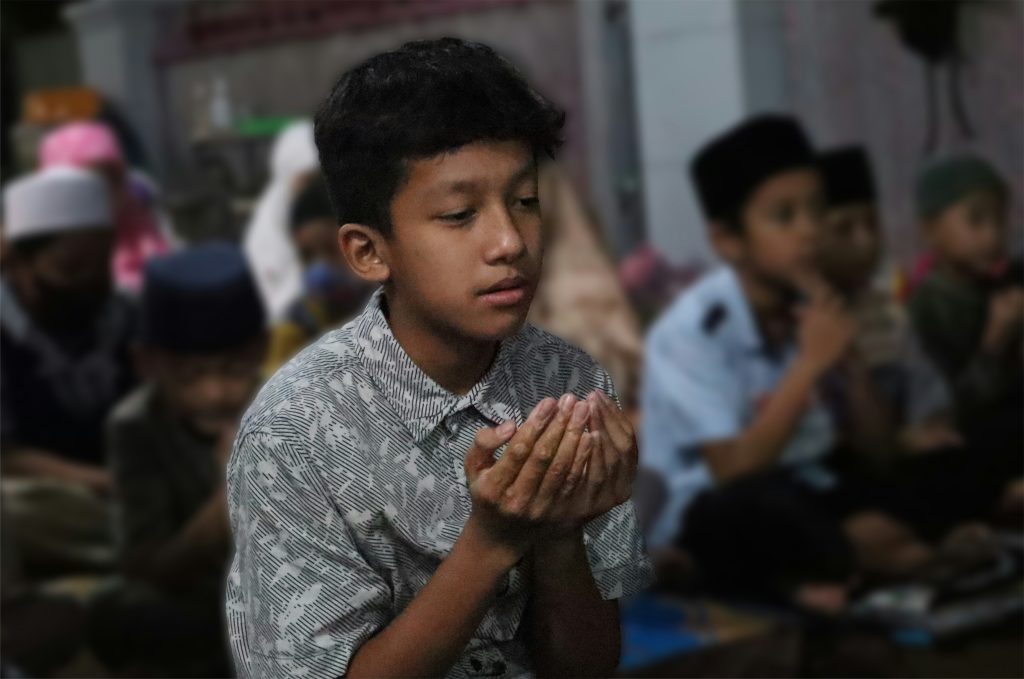
On Wednesday, the 6th of August, during the Prayers for Gaza event at the Islamic Community Center of Potomac, I was deeply moved by the recitation of the Dua Nasiri, the Prayer of the Oppressed. Hearing it recited in that sacred space, surrounded by a community gathered in grief and solidarity, gave voice to both the anguish and the unyielding hope of those who cry out for justice and mercy.

My thanks to Imam Tarek Elgawhary and Imam Refai Arefin for introducing me to this prayer and for sharing its history and meaning. Composed in the 17th century by Imam Muhammad Ibn Nasir, it became a spiritual act of resistance, sustaining people through foreign occupation and oppression. Its plea, “You alone are enough for us, O Lord”, remains as urgent today as it was then.

I share here a recording by Ghuydar Bashmaf, Bilal Atiya, and Sami Zaharna, offered for all who endure the ongoing suffering in Gaza and the Occupation of Palestine. May its words strengthen our faith, awaken our compassion, and move us to act for justice.

I also offer this prayer, inspired by Dua Nasiri:

A Prayer for the Oppressed — After Dua Nasiri

O Source of Mercy,

To whom the distressed turn and the forgotten cry out—

we lift our hearts to You.

To You who are near with compassion,

To You who shelter the weak,

we call out from the ruins of grief and the silence of injustice:

You are enough for us. You suffice.

Before You, we place our trembling hope.

Our strength is diminished, our voices are hoarse.

Children cry out from beneath the rubble,

elders weep beside shattered homes.

O Sustainer of those bowed down,

O Light that is never extinguished—

do not let despair close in around us.

Do not let cruelty prevail in the streets of Rafah, Khan Younis, and Gaza City.

Do not let our hearts grow numb to the suffering of Your people.

Lift up those who are bowed low.

Restore the dignity stripped away by siege and fear.

Let justice fall like rain upon scorched land.

Let mercy rise like dawn over a weary people.

Break the grip of oppression.

Dismantle the systems that feed violence and domination.

Turn the designs of harm into pathways for peace.

Protect the innocent from every danger.

O Healer of wounds, O Mender of what is torn—

guide us to act with courage and compassion.

Teach us to resist evil without becoming it.

Keep our eyes open and our hearts soft.

And when we do not know what to do—

when our hands feel too small and our spirits too tired—

remind us that You are near, and that love is still stronger than fear.

O Holy One,

Hold the children in Your care.

Strengthen the parents who cannot sleep.

Protect the elders whose hope rests in prayer.

Bring healing, bring peace, bring liberation.

Ameen.
Cedar Lane Unitarian Universalist Congregation, located in Bethesda, MD, is a spiritual home for people from many walks of life – seekers, skeptics, longtime believers, and those who aren’t sure what they believe. Some of us find meaning in God, others in nature, human connection, or the mystery of existence itself. What brings us together isn’t one shared belief, but a shared commitment to compassion, curiosity, and putting love into action.

As a Unitarian Universalist congregation, we are guided by values rather than creeds. We believe everyone deserves the freedom to follow their own spiritual path—and that we grow stronger when we honor each other’s stories and identities.

We welcome you to join us for worship in-person or via livestream this Sunday at 10:30 AM ET.

More Posts

The Rev. Dayna Edwards

Surrender as Resistance 

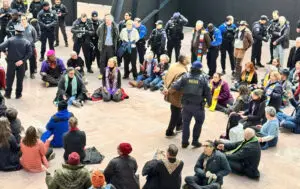
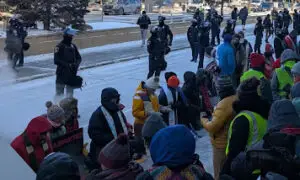
Answering a nationwide call for clergy and people of faith and conscience, Rev. Dayna reflects on her time in Minneapolis for the ICE OUT demonstrations.

The Rev. Abhi Janamanchi

Practicing Resistance

Rev. Abhi explores how remaining open to joy is an important part of practicing resistance in these times.

Share:

Send Us A Message

Sliding Scale Options

suggested love offering of $20 / seat

Sliding Scale Guide

We know it can be complicated to decide how much to pay, and there’s no one right answer for anyone. Many thanks to UU@UN for providing an equitable model for payments.

Consider paying at a lower tier if many of these are true for you:

  • I am directly affected by environmental racism.
  • I have immigration-related expenses.
  • I’m supporting children or have other dependents.
  • I have significant debt.
  • I have medical expenses not covered by insurance.
  • I receive public assistance.
  • I am an elder with limited financial support.
  • I am an unpaid community organizer.
  • I have been denied work due to incarceration history.
  • I would need to budget in order to afford a $25 expense.

Consider paying at a higher tier if multiple of these are true for you:

  • I or my family owns the home I live in.
  • I have investments, retirement accounts, or inherited money.
  • I can travel recreationally.
  • I have access to family money and resources in times of need.
  • I work part time by choice.
  • I have a relatively high degree of earning power due to level of education, gender and racial privilege, class background, etc.
  • In terms of its impact on my lifestyle (e.g. my ability to pay this month’s bills), $50 means functionally about the same as $15. My bank account would look pretty much the same either way.


A reflection from Pronoia Coaching:

When I pay more, I know that I am helping others to access the event.

When I pay in the middle, I know I am helping the organizers cover costs.

And when I pay less, I know I am letting my community hold me and support me.

All of these are wonderful and acceptable ways of participating.