
Elements of Social Justice as a Spiritual Practice
- Justice-making isn't a means to some end; it is the end.
- We want to be realistic as well as idealistic in our efforts to be compassionate.
- Our spirituality of justice is a collaborative journey not a solo adventure.
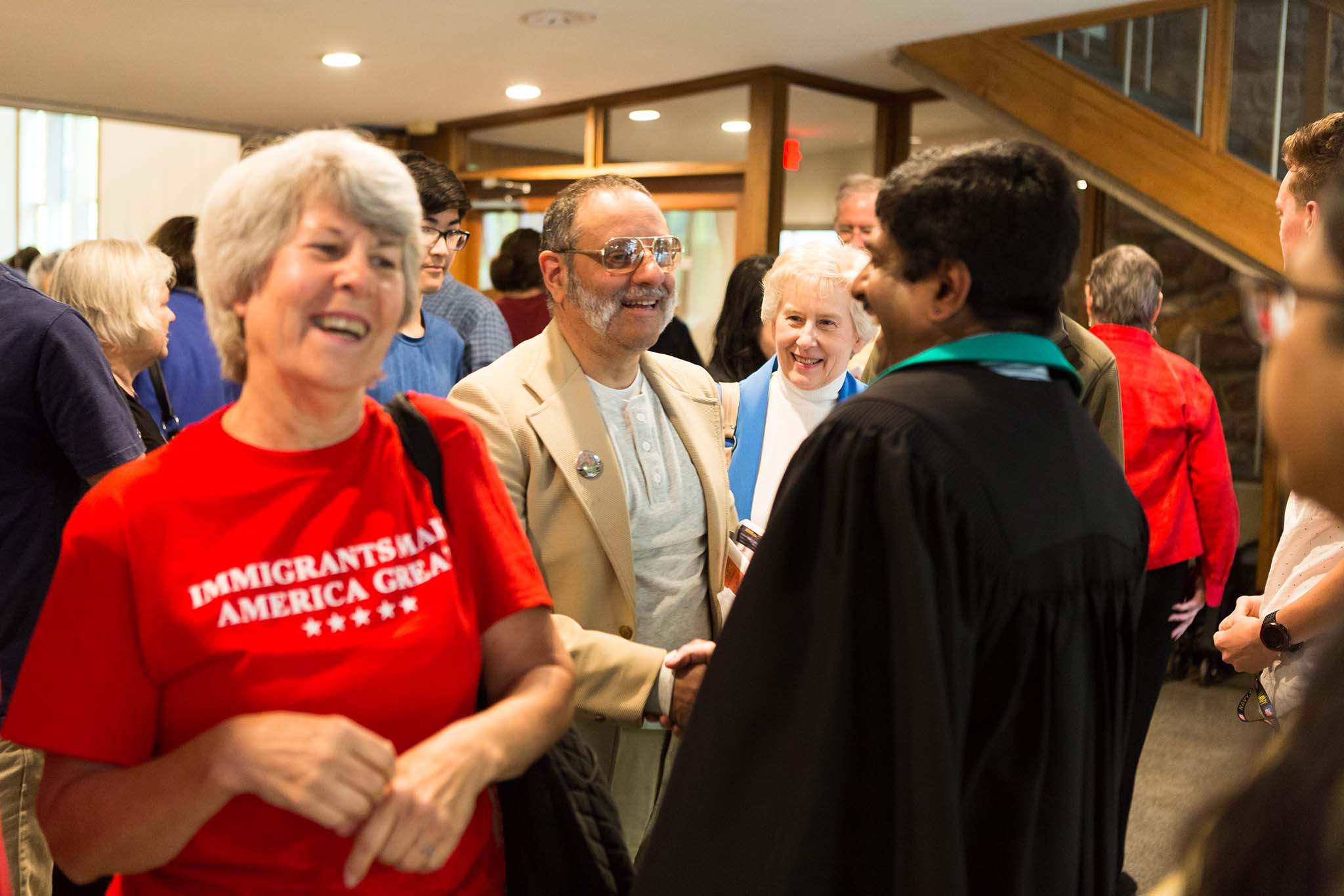
- Unitarian Universalist faith calls us to affirm and promote the inherent worth and dignity of every person. We are doing spiritual work when we make a commitment to be a welcoming congregation for gay, lesbian, bisexual, and transgender people; when we commit ourselves to study and change individual and institutional attitudes around race, class, and ethnicity; when we raise the issue of accessibility and work towards making our congregations more welcoming to people with disabilities; and when we witness for the rights of the marginalized, the oppressed, and the poor be it immigrants, refugees, farm workers, racial and religious minorities, or women, seniors, and children.
Social justice as a spiritual practice tests our ethical professions, challenges our complacency, and summons our courage. But it is not a recipe for sainthood, merely a prescription for sane, peaceful, and decent living.
Move Into Justice Work That Matters
Contact: Andrew Batcher, Social Justice Coordinator, socialjustice@cedarlane.org
Get timely social justice news when you subscribe to Cedar Lane’s Social Justice Bulletin. After subscribing, you will be able to use the collective email address to send your own social justice news and receive the news and alerts sent by others.