
Volunteer Coordination
Wondering where your interests and/or talents would make a good fit at Cedar Lane? Connect with the volunteer coordinator to discuss ways of exploring deeper engagement at Cedar Lane.

Wondering where your interests and/or talents would make a good fit at Cedar Lane? Connect with the volunteer coordinator to discuss ways of exploring deeper engagement at Cedar Lane.

The Membership Engagement Team welcomes newcomers and helps them find their way into connected engagement and support at Cedar Lane. The team also helps support members as they continue along the spectrum of faithful engagement to ensure that they are growing in ways that give them life.
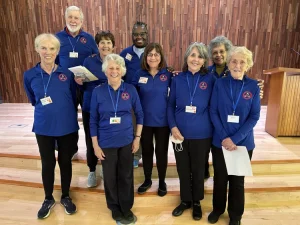
Caring ministry team members are volunteers who have been trained to provide confidential pastoral care to others, under the leadership of the ministers and the lay coordinators. They develop skills, such as active listening and supportive presence, that are needed to provide an empathetic and trustworthy connection with those in need. Training also includes ongoing classes or workshops in particular subjects, such as dementia. Members of the caring team meet with Cedar Lane members and friends in their home, hospital, nursing home, or rehabilitation center. Caring ministry support is usually requested during times of life transition, such as illness or injury and recovery, death of a loved one, or confinement to a hospital or other facility. The caring team meets monthly in person for planning and coordination. If you have been a member of the congregation for at least a year and are interested in serving the congregation as a member of the caring team, contact the minister of pastoral care.
Wondering where your interests and/or talents would make a good fit at Cedar Lane? Connect with the volunteer coordinator to discuss ways of exploring deeper engagement at Cedar Lane.
The Membership Engagement Team welcomes newcomers and helps them find their way into connected engagement and support at Cedar Lane. The team also helps support members as they continue along the spectrum of faithful engagement to ensure that they are growing in ways that give them life.
Caring ministry team members are volunteers who have been trained to provide confidential pastoral care to others, under the leadership of the ministers and the lay coordinators. They develop skills, such as active listening and supportive presence, that are needed to provide an empathetic and trustworthy connection with those in need. Training also includes ongoing classes or workshops in particular subjects, such as dementia. Members of the caring team meet with Cedar Lane members and friends in their home, hospital, nursing home, or rehabilitation center. Caring ministry support is usually requested during times of life transition, such as illness or injury and recovery, death of a loved one, or confinement to a hospital or other facility. The caring team meets monthly in person for planning and coordination. If you have been a member of the congregation for at least a year and are interested in serving the congregation as a member of the caring team, contact the minister of pastoral care.