
Please ensure Javascript is enabled for purposes of website accessibility

Who We Are

Cedar Lane is a spiritual home for people from many walks of life – seekers, skeptics, longtime believers, and those who aren’t sure what they believe. Some of us find meaning in God, others in nature, human connection, or the mystery of existence itself. What brings us together isn’t one shared belief, but a shared commitment to compassion, curiosity, and putting love into action.

As a Unitarian Universalist congregation, we’re guided by values rather than creeds. We believe everyone deserves the freedom to follow their own spiritual path—and that we grow stronger when we honor each other’s stories and identities.

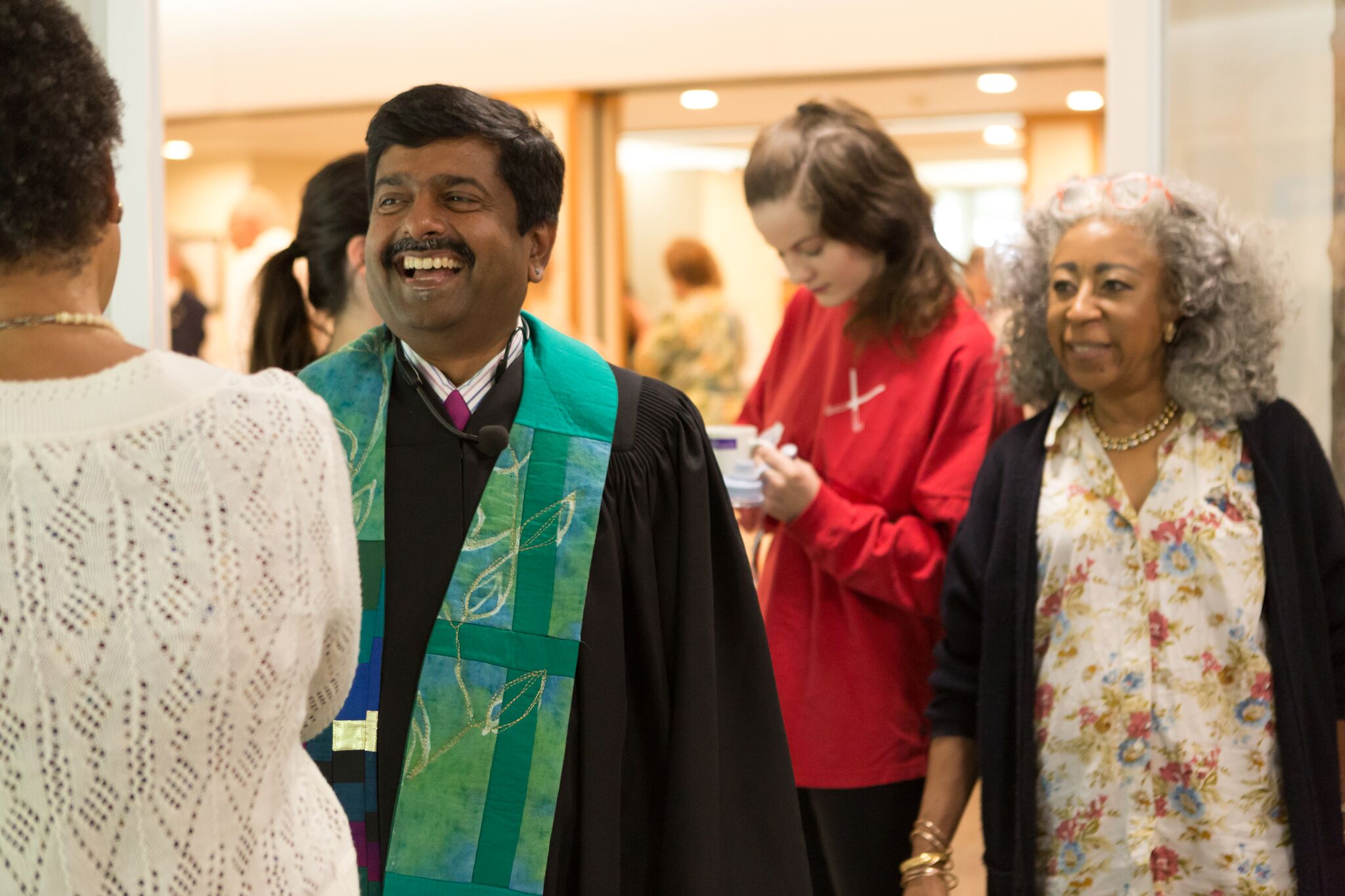
Senior Minister Abhi Janamanchi greets people in the church.
Cedar Lane building exterior with trees and grass

Cedar Lane Unitarian Universalist Congregation is a community where love works.

Together, we explore the eternal, nurture community, and build a more just world.

Together, we dare to embody beloved community.

Vision and Mission

Ministers and Staff

  • Rev. Abhi Janamanchi, Senior Minister
  • Rev. Dayna Edwards, Minister of Faith Formation
  • Rev. Archene Turner, Affiliated Community Minister
  • Jen Morley, Executive Director
  • Michael Holmes, Director of Music & Arts
  • Dr. Jasmin Lee, Accompanist
  • Nicolle Singer, Membership Coordinator
  • Andrew Batcher, Social Justice Coordinator
  • Eleanor Irion, Faith Formation Assistant
  • Jenny Crane, Children’s Choir Director
  • Lizzie Person, Office Administrator
  • Clare Jacocks, Bookkeeper
  • Erin Wigginton, Rental Service Manager
  • José Morant, Facilities Manager
  • Khalid Straker, AV Coordinator
  • Dr. Henry Sgrecci, Music Director Emeritus

Sliding Scale Options

suggested love offering of $20 / seat

Sliding Scale Guide

We know it can be complicated to decide how much to pay, and there’s no one right answer for anyone. Many thanks to UU@UN for providing an equitable model for payments.

Consider paying at a lower tier if many of these are true for you:

  • I am directly affected by environmental racism.
  • I have immigration-related expenses.
  • I’m supporting children or have other dependents.
  • I have significant debt.
  • I have medical expenses not covered by insurance.
  • I receive public assistance.
  • I am an elder with limited financial support.
  • I am an unpaid community organizer.
  • I have been denied work due to incarceration history.
  • I would need to budget in order to afford a $25 expense.

Consider paying at a higher tier if multiple of these are true for you:

  • I or my family owns the home I live in.
  • I have investments, retirement accounts, or inherited money.
  • I can travel recreationally.
  • I have access to family money and resources in times of need.
  • I work part time by choice.
  • I have a relatively high degree of earning power due to level of education, gender and racial privilege, class background, etc.
  • In terms of its impact on my lifestyle (e.g. my ability to pay this month’s bills), $50 means functionally about the same as $15. My bank account would look pretty much the same either way.


A reflection from Pronoia Coaching:

When I pay more, I know that I am helping others to access the event.

When I pay in the middle, I know I am helping the organizers cover costs.

And when I pay less, I know I am letting my community hold me and support me.

All of these are wonderful and acceptable ways of participating.